

Gas vs electric hot water is a choice most Sydney homeowners only think about when the old system gives up, usually on a cold morning with a full house waiting for a shower. The short answer is that neither one wins for every home. An electric storage tank is the cheapest system to buy and install, a heat pump is the most efficient electric option to run, and gas suits homes that already have a gas connection and want hot water that keeps up with a busy household.
The right system for your home comes down to a handful of things you can check: whether gas is connected at the property, how many people use hot water and when, where the unit can sit, and whether you have rooftop solar. This guide walks through each one so you can narrow the choice before a plumber comes out to look at your existing setup.
Key Takeaways
- Heat pumps use far less energy than a standard electric tank or a gas system to heat the same water.
- Gas hot water needs a gas connection or room for LPG bottles.
- Rooftop solar can significantly reduce the running cost of an electric tank or a heat pump.
- Switching between gas and electric changes the pipework, the power supply or the flue, so the site needs checking first.
- In NSW, a new hot water system has to be installed by a licensed plumber or gas fitter, and you should receive compliance certificates for it.

Gas vs Electric Hot Water Side by Side
The table below sets out the main differences, using the guidance published by the Australian Government on energy.gov.au and its Your Home guide.
| What you are weighing up | Electric storage | Heat pump (electric) | Gas continuous flow or storage |
|---|---|---|---|
| Cost to buy and install | Lowest of the three | Higher to buy and install | More than an electric tank and less than a heat pump |
| Running cost | Generally more expensive to run, unless it runs on solar power | Cheap to run | Medium to high |
| Heat delivered for the energy used | Just under one unit of heat per unit of electricity | Around three to five units of heat per unit of electricity | About three quarters to just under one unit of heat per unit of gas |
| What the home needs | Power supply and space for the tank | Outdoor space for the unit | A gas connection or LPG bottles, and an outdoor spot for venting |
| Runs out of hot water? | It can if the tank is too small | It can if the tank is too small | Continuous flow does not run out, but a gas storage tank can if it is too small |
How Electric Hot Water Systems Work, Including Heat Pumps
An electric storage system heats water with an element inside an insulated tank, much like a large kettle, and keeps it hot until you need it. The Australian Government says about half of Australian households use one. They are the cheapest type to buy and install, but they are generally more expensive to run unless they are powered by rooftop solar.
Many electric tanks sit on an off peak, or controlled load, circuit so the water heats when electricity is cheaper. The Your Home guide says tanks larger than 250 litres suit off peak operation, while smaller tanks can run out of hot water before the circuit switches back on.
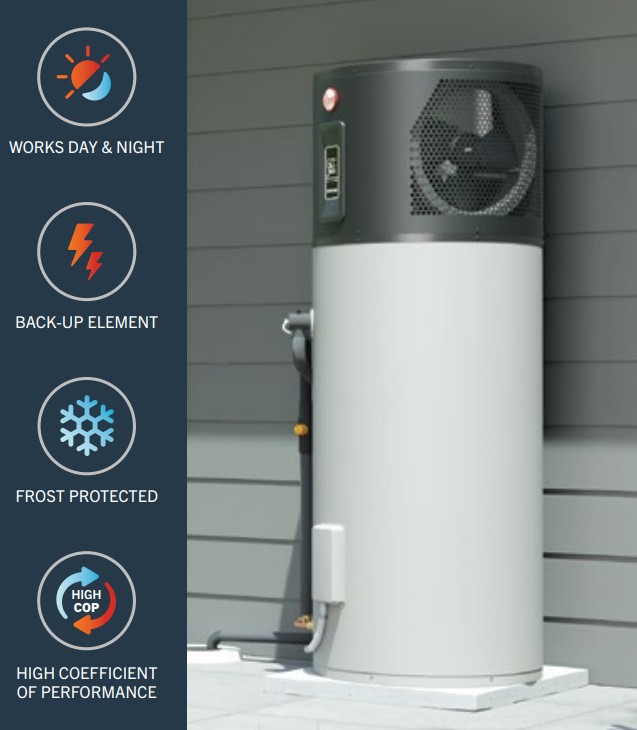
A heat pump is also an electric hot water system, but it works differently. Instead of heating the water directly, it uses a fan and compressor to pull warmth out of the surrounding air and move it into the tank. Government figures put its energy use at about 30 percent of a conventional electric system. There are a few things to plan for with a heat pump:
- The compressor makes noise, so the unit needs a spot away from bedroom windows and the neighbours.
- An integrated unit sits on top of the tank and can be a straightforward swap for an old electric tank.
- A split unit keeps the tank and the outdoor unit apart, so the noisy part can sit low and the tank can go somewhere else.
Electric instantaneous units also exist, but the Your Home guide notes they draw a lot of power and usually need a three phase connection, which many houses do not have.
How Gas Hot Water Systems Work in a Sydney Home
A gas system burns gas to heat the water, either as it flows through the unit or inside a storage tank. Continuous flow is the most common type of gas hot water. It heats water only when a tap is turned on, so it does not run out, and the unit is compact because there is no tank. Gas storage tanks heat water quickly, which means they can use a smaller tank than an electric system, but the government guide describes them as particularly inefficient because heat escapes from the base of the tank where the flame sits.
Gas hot water units are usually installed outdoors because of venting requirements. Natural gas comes through the street network, and homes without it can run a system on bottled LPG. The Your Home guide says an LPG system generally needs two or more 45 kg bottles to avoid frequent swaps, and that LPG systems are around two to three times more expensive to run than systems on piped gas.
Running Costs and Efficiency of Gas and Electric Hot Water
Water heating takes a large share of a home’s energy use. The Australian Government puts it at between 15 and 30 percent of household energy use, the second largest share in the home.
The Your Home guide compares systems by how much heat they deliver for the energy they use. A heat pump delivers around three to five units of heat for every unit of electricity. A new electric storage tank delivers just under one, and a gas system delivers between about three quarters and just under one. The same guide lists heat pumps among the cheapest systems to run, describes gas systems as among the more expensive to operate, and suggests that households replacing a gas system consider an efficient electric one. It also describes gas systems as reliable and space efficient.
Your actual bills depend on your tariffs, how much hot water the household uses, and whether you have solar. A home with a large rooftop solar system can run an electric tank or a heat pump on its own daytime power, which the Your Home guide says can make hot water cheap and close to free of emissions. A home with gas already connected and no solar may still find gas continuous flow a sensible choice, especially if the household runs several showers back to back.
Do You Have a Gas Connection for Gas Hot Water?
The first question for anyone leaning towards gas is whether the house is connected. If you already have a gas meter running a cooktop or an old gas hot water unit, the supply is there, although a continuous flow unit can need a bigger gas pipe or meter to deliver enough hot water to several taps at once.
If the house has never had gas, a new connection is applied for through Jemena, the gas network company, or through your energy retailer. Jemena states that from 1 October 2026, a customer requesting a new gas connection pays the full cost of that connection upfront. For a home without gas, that connection cost belongs in the comparison alongside the system itself.
Which Hot Water System Suits Your Household
Once you know what the property can take, the household decides the rest. These are the questions we work through with Sydney homeowners when they are choosing a replacement:
- How many people live in the home: the Your Home guide uses about 50 litres of hot water per person per day as a typical figure, and a tank that is too small runs out.
- When the household uses hot water: several showers in a row each morning favours continuous flow gas or a well sized tank.
- Whether you have rooftop solar: solar power tips the running cost towards an electric tank or a heat pump.
- How much space there is outside: a heat pump needs an outdoor spot, ideally away from bedroom windows.
- Whether you are building a new home: in NSW, BASIX sets energy and emissions targets, and the Your Home guide says a higher emission system such as an electric storage tank may need solar alongside it to comply.
If your current system is ageing but still working, it pays to look at the options now. The government guide makes the same point: the choice is easier when you are not standing in a cold shower waiting for a replacement.
Switching Between Gas and Electric Hot Water
A like for like replacement is the simplest installation, because the pipework and supply are already in place. Switching from electric to gas involves connecting the new unit to the gas supply and fitting the right flue, and the unit has to sit where it can vent safely. Switching from gas to a heat pump changes what the site needs in a different way: the outdoor unit needs a suitable spot, and any new circuit or power point is electrical work. We work with local electricians we trust for that part.
Whichever way you go, the installation has to meet the national plumbing standard for heated water services, AS/NZS 3500.4. Storage systems must heat to at least 60°C regularly to stop bacteria such as Legionella growing, and a tempering valve keeps the water at your taps from going above 50°C so nobody is scalded. In NSW, any plumbing or gasfitting work, including LPG, needs a licensed plumber or gas fitter regardless of the cost of the work. Blue Rhino Plumbing holds NSW contractor licences 289152C and 356773C, so the plumbing, the gas connection and the flue are all handled by one team, and you receive compliance certificates for the installation.
You can read more about the systems we install and replace on our hot water repairs and installation page, and about connections and compliance on our gas fitting page.
Frequently Asked Questions About Gas vs Electric Hot Water
Is gas or electric hot water cheaper to run?
It depends on the type of electric system. Government guidance says a heat pump is cheap to run and a standard electric storage tank is generally more expensive to run unless it uses solar power. The same guidance describes gas as having medium to high running costs. Your tariffs, your hot water use and whether you have solar all change the result for your home.
Is a heat pump better than gas hot water?
On energy use, yes. A heat pump delivers around three to five units of heat for each unit of electricity, while a gas system delivers less than one unit of heat for each unit of gas. A heat pump costs more to buy and needs outdoor space away from bedrooms, while gas continuous flow suits homes that already have gas connected and want hot water that does not run out.
Can an electric hot water system run on off peak power?
Many electric storage tanks run on an off peak or controlled load circuit, which is billed at a lower rate. Tanks larger than 250 litres suit this best. A smaller tank can run out before the circuit switches back on. Some heat pumps work with only certain types of controlled load, so the manufacturer’s instructions need checking.
Does a gas hot water system have to be installed outside?
Gas hot water units are usually installed outdoors because of venting requirements. Some gas continuous flow models can be mounted inside, but only where suitable ventilation is available. We check where the unit and the flue can go when we look at your property.
Do I need a licensed gas fitter to install gas hot water in NSW?
Yes. In NSW you need a licence or certificate to do any plumbing, draining or gasfitting work, including LPG gasfitting, whatever the cost of the work. That covers connecting a new gas hot water system to the supply.
Book Blue Rhino Plumbing to Assess Your Hot Water System
If you are weighing up gas vs electric hot water, the next step is a look at your existing system, your gas supply and the space around the unit. We will explain the options that suit your home and household, then supply and install the system you choose, whether that is a like for like replacement, a heat pump or a switch from electric to gas.
Blue Rhino Plumbing works across Sydney, including Ryde, North Ryde and Macquarie Park, with someone on call 24/7 if your hot water has already failed. Call 0468 014 771, email plumbing@thebluerhino.com, or send us an enquiry. Rueben or the team will be happy to talk you through what your home needs.
Our Services
For all enquiries call us on 0468 014 771 or simply fill in the enquiry form below.
Get A Free Quote
Speak with our team today to receive a free, no-obligation quote for your plumbing project.