
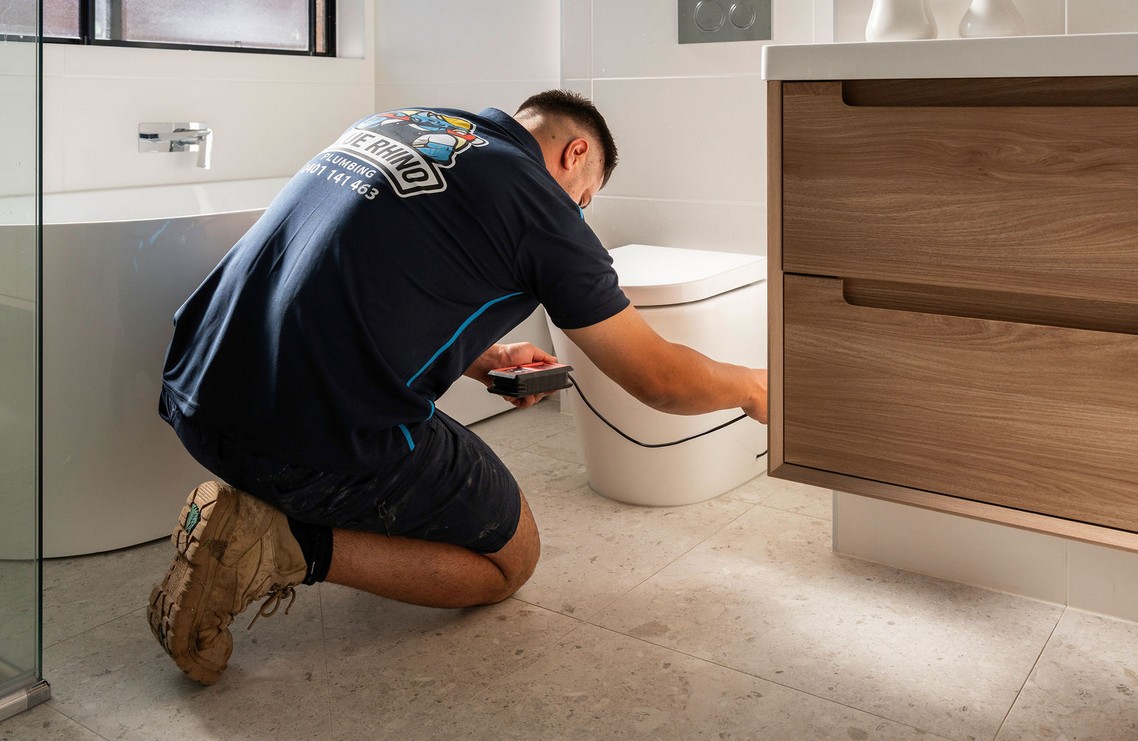
A blocked toilet is one of the few jobs most Sydney homeowners try themselves before calling a plumber, and in most cases that is the right call.
A flange plunger and a bit of patience clears the majority of everyday clogs.
If this does not clear the blockage or it keeps coming back, this is the time to give us a call to get the reason for the blockage rectified.
Key Takeaways
What Type of Plunger Actually Works on a Toilet?
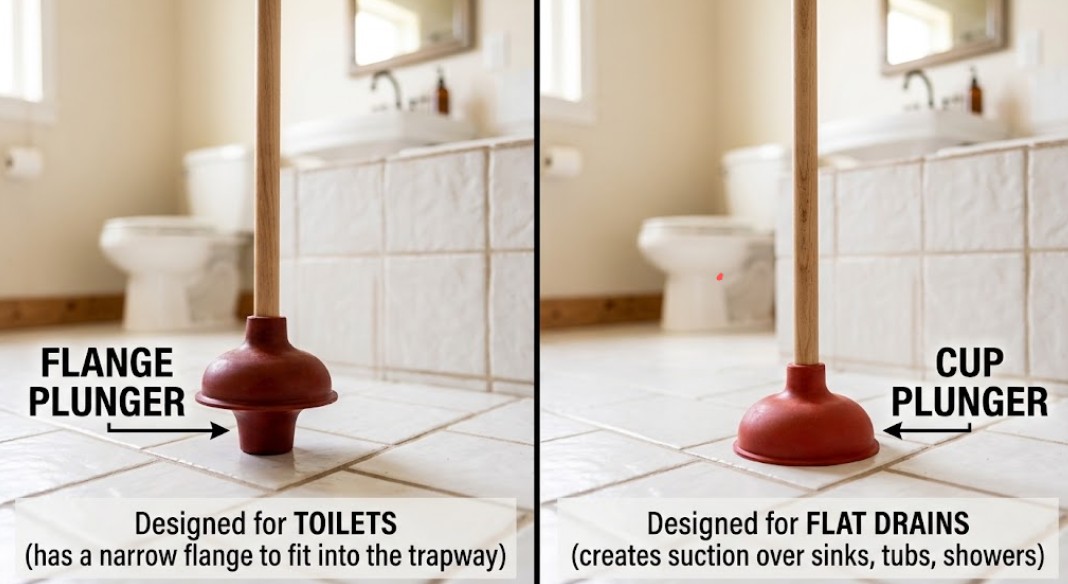
A flange plunger, the type with an extra fold of rubber extending from the base, is the only plunger designed to seal a toilet outlet. The flat, cup-shaped sink plunger sold on the same shelf will not form an airtight seal against the curved shape of a toilet bowl, so most of the force is lost before it reaches the blockage.
Push the flange out, lower the plunger fully into the water so the cup is submerged, and press down slowly the first time to force trapped air out before you start plunging properly.
How Do You Plunge a Toilet Correctly?
Step 1: Seal the plunger over the outlet and push down slowly to release trapped air.
Step 2: Plunge with firm, steady strokes for 15 to 20 seconds, keeping the seal unbroken the whole time.
Step 3: Flush on a low volume to check if it is clearing before flushing normally.
If nothing has changed after two or three genuine attempts, stop. Continued plunging on a blockage the plunger cannot reach will not clear it, and risks pushing water over the bowl.
What if Plunging Does Not Clear It?
A toilet auger, also called a closet auger, is a flexible cable with a crank handle built to reach past the trap where a plunger cannot. Feed the cable in gently, turn the handle to work it around the bend, and withdraw slowly once you feel the resistance clear.
An auger handles most blockages a plunger cannot, including solid objects lodged in the trap. If the auger meets solid resistance that will not budge, stop. Forcing it further risks scratching the bowl or pushing the object deeper rather than clearing it.
When Should You Stop and Call a Plumber?
A few signs mean it is time to call rather than keep trying: water rising close to the rim after one flush, the same toilet blocking again within a week or two, more than one fixture in the house draining slowly at the same time, or gurgling from other drains when the toilet is flushed.
Multiple slow drains at once usually means the blockage is further down the shared line, not in the toilet trap, and that needs a proper drain inspection rather than another round with a plunger. Blue Rhino Plumbing runs CCTV drain inspections across Sydney so the cause gets confirmed before anything is repaired, not guessed at.
For toilets that keep blocking, crack, or run after the clog clears, our toilet repairs and installation team can check whether the toilet itself is the problem.
Is a Blocked Toilet Ever an Emergency?
If the only toilet in the house is overflowing, or sewage is backing up into a shower or floor drain, that is an emergency. Turn off the water supply valve at the base of the toilet first to stop it overflowing further, then call us. Blue Rhino Plumbing runs an emergency plumbing service across Sydney, 24/7, on 0468 014 771.
For blockages further down the system rather than in the toilet itself, our blocked drains and toilets page covers the clearing methods we use, from hydro jetting to CCTV inspection.
Frequently Asked Questions
Can I use dish soap to unblock a toilet?
Yes, as a supplement, not a fix on its own. A small amount of dish soap with hot (not boiling) water can help lubricate a minor blockage while you plunge. It will not clear a genuine obstruction by itself, so pair it with a flange plunger rather than relying on it alone.
Why does my toilet in Sydney keep blocking after I clear it?
Recurring blockages usually mean a partial obstruction is still sitting in the trap, an older toilet has a narrow trapway, or tree roots or a pipe defect further along the line are catching waste. A licensed plumber can confirm the exact cause with a camera inspection rather than another round of guessing.
Is it safe to use a chemical drain cleaner on a blocked toilet?
No, we do not recommend it. Chemical drain cleaners are formulated for sinks and can damage the wax seal, rubber components, or older piping in a toilet. They also create a safety risk if you then need to plunge or auger the bowl afterwards.
How much does it cost to call a plumber for a blocked toilet in Sydney?
It depends on the cause. A straightforward clear with an auger or drain machine costs less than a job that needs a camera inspection or pipe repair. Call 0468 014 771 for a straight answer on your specific situation before anyone comes out.
Will a plumber need to remove the toilet to clear a blockage?
No, not usually. Most blockages clear with an auger or drain machine without removing the toilet. Removal is only needed when an object is lodged where the auger cannot reach it, or when the toilet itself needs replacing.
Plunger not cutting it? Get in touch with Blue Rhino Plumbing on 0468 014 771. Same day where we can, straight answer either way.
What Others Are Reading:
Our Services
For all enquiries call us on 0468 014 771 or simply fill in the enquiry form below.
Get A Free Quote
Speak with our team today to receive a free, no-obligation quote for your plumbing project.